Incoming fiber or yarn
Input: material identity, filament/staple form, denier/count, finish, package and supplier lot.
Evidence: applicable technical/content record and incoming check.
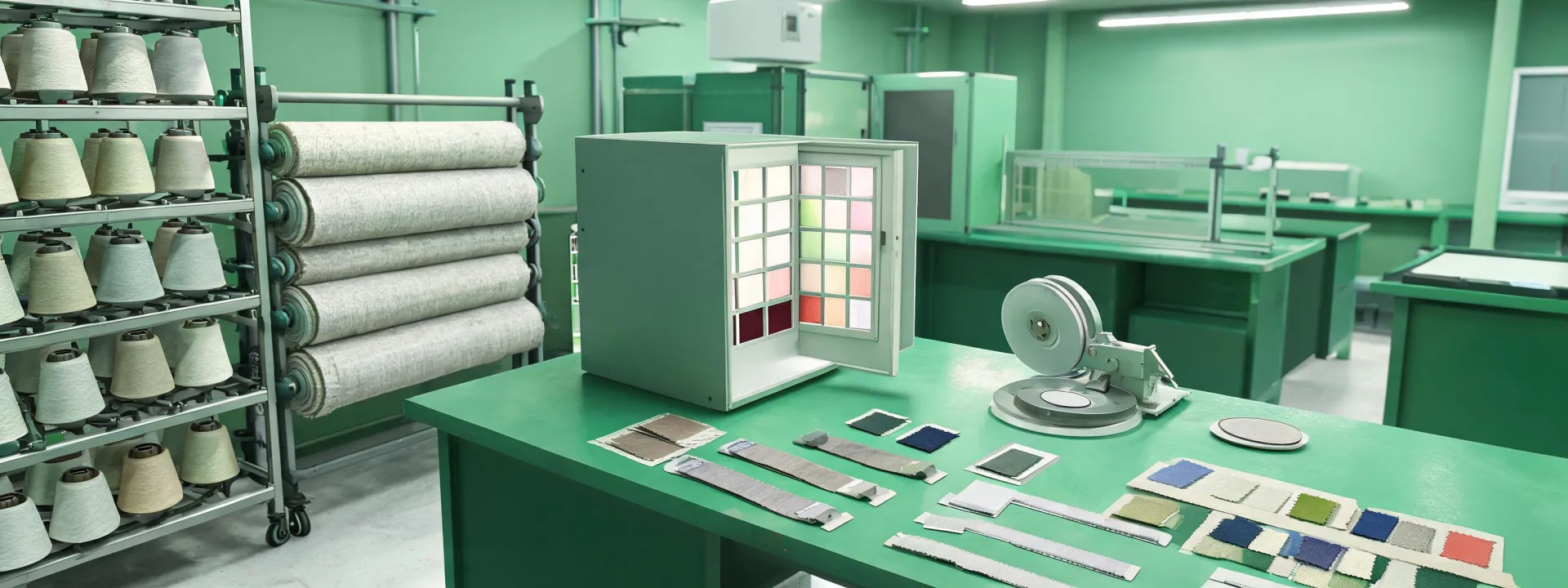
Quality assurance
Quality control begins with an approved specification and ends with a traceable decision. Repreve separates incoming identity, dye and finish controls, physical tests, shade review and production-lot release so one record is not asked to prove everything.
Five control boundaries
Input: material identity, filament/staple form, denier/count, finish, package and supplier lot.
Evidence: applicable technical/content record and incoming check.
Input: substrate, color standard, process, recipe reference and finish.
Evidence: lab dip/strike-off approval, illuminant, tolerance and production shade review.
Input: composition, weave/knit, GSM, width, color, finish and specimen direction.
Evidence: named method/version, conditioning, result, units, date and issuer.
Input: approved standard, order specification, inspection plan and permitted deviations.
Evidence: roll/lot identification, inspection status, shade, finish, quantity and release decision.
Credential and report scope
The supplied brand configuration contains no verified active certificate list. The categories below are review classes, not credential claims.
Check issuer, chain, entity/site, material/product scope and validity.
Check method, specimen, conditioning, result, units, date and tested article.
Check jurisdiction, requirement, substances/article scope, issuer and declaration date.
Check named organization and site; do not present it as automatic product-performance approval.
A change in source, blend, construction, shade, coating, laminate, finish or processing route can trigger renewed review. Traceability links the change to the decision rather than implying that an earlier approval covers all future production.
Provide the material, construction, color, finish, test method, approval stage and production-lot question.